

DECK & FENCE STAINING · TWIN CITIES

Deck Staining Minneapolis Weather Cannot Undo

★★★★★4.8 from 140+ Google Reviews

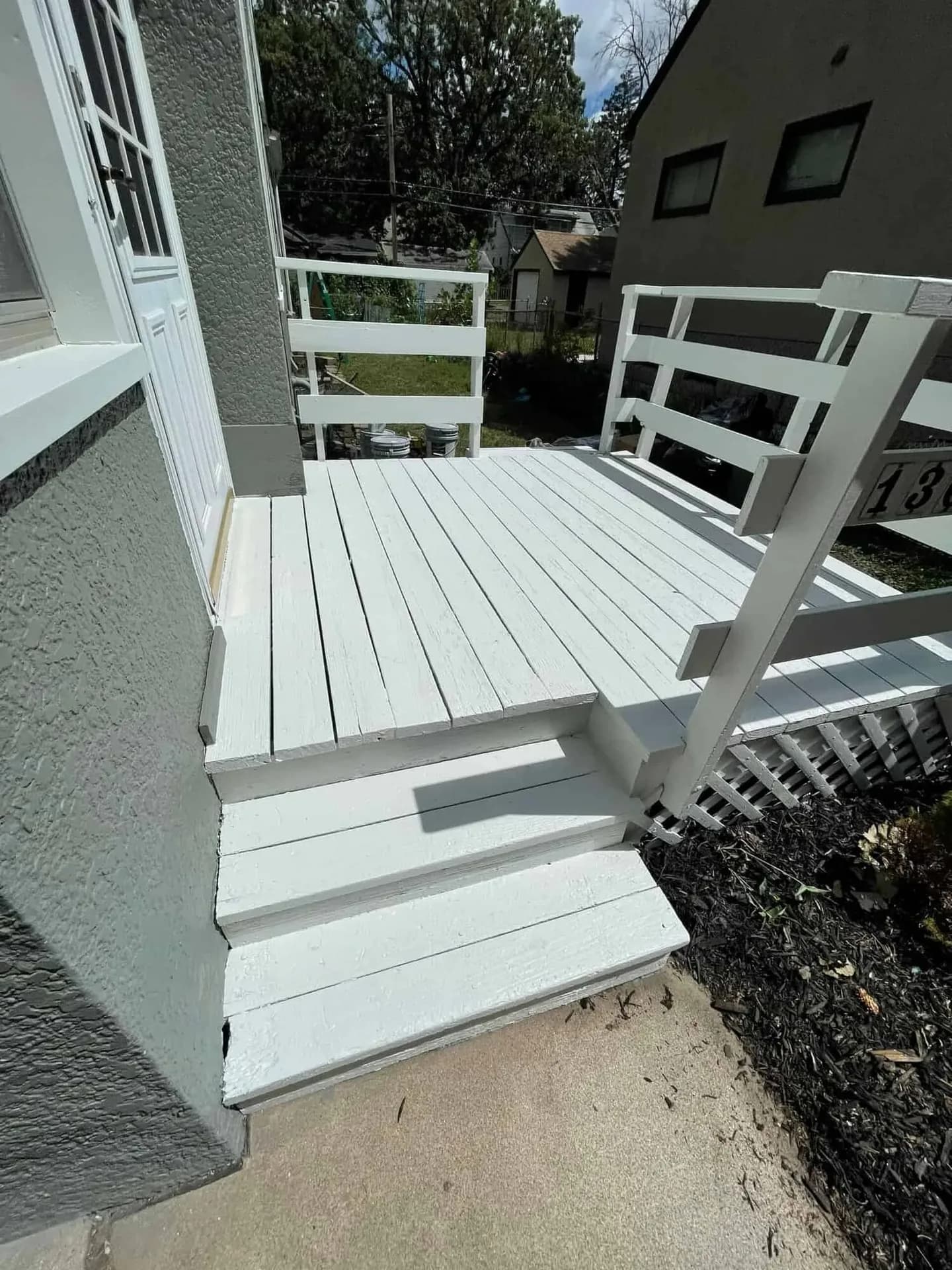
Deck staining in Minneapolis done properly: stripped back, sanded, repaired, then a stain that soaks into the wood instead of sitting on it.

Durahome Premium Logo Symbol

Book Your Free Estimate Today!

We’ll only use your contact details to follow up regarding your project.

Step 1 of 2: Contact Details50%
We get clear together on your goals.
Your cost is delivered in writing.
Local & Experienced in MSP.
Painting completed in days, not weeks.
4.8 Stars from 140+ reviews.
Quick Answer

How much does deck staining cost in Minneapolis?

Most Minneapolis deck staining projects land between $1,500 and $2,500. The range is driven less by size than by condition: a deck stripped of a failing solid stain, sanded and repaired takes several times the labor of one that only needs washing and a maintenance coat. Railings, stairs, skirting, benches and pergolas all add surface. Fences are quoted separately by linear footage, and both are confirmed in a free walkthrough.
Get Your Free Estimate
THE MINNESOTA PROBLEM

What This Climate Does to Outdoor Wood

A deck is the hardest-worked exterior surface on any Twin Cities property, and it is the one most often treated as an afterthought. Understanding why they fail is most of understanding how to fix them.
FAILURE CASE 01

Horizontal surfaces take everything

Your siding sheds water. Your deck boards hold it. Rain, snowmelt and ice sit on a flat surface until they evaporate or soak in, which is why the deck boards fail years before the railings do — and why a deck that looks fine from the kitchen window can be silvered and open-grained underfoot.
Prevented in Durahome Surface Prep
FAILURE CASE 02

Freeze–thaw works water into the wood and then expands it

Roughly thirty cycles a year in this metro. Water gets into a check in the grain, freezes, opens it wider, and lets more water in next time. That is the mechanism behind splintering, cupping and the checking pattern you see on an untreated deck.
Prevented in Durahome Surface Prep
FAILURE CASE 03

Snow load sits on the deck for months

Not hours — months. A deck under snow from December to March is a wet deck from December to March, and the underside stays damp long after the top has dried.
Prevented in Durahome Surface Prep
FAILURE CASE 04

UV breaks down the surface fibers

The silvering you see is the lignin in the wood surface degrading under ultraviolet light. It is cosmetic at first and structural eventually, because a degraded surface layer holds moisture rather than shedding it.
Prevented in Durahome Surface Prep
FAILURE CASE 05

Ground contact and skirting

Posts, stair stringers and skirting boards sit closest to the wet, and they are the first place rot appears on a deck that is otherwise sound.
Prevented in Durahome Surface Prep
PREVENTION GUARANTEE

None of these is exotic. All five are prevented in the preparation stage, which is why our estimates spell prep out surface by surface and why the crews photograph it as they go.

HOW IT RUNS

Strip, Sand, Repair, Stain

This is the sequence that separates a deck finish that lasts from one that peels off in sheets next spring. Nearly all of it happens before any stain comes out.

Assessment

We check what is currently on the deck — a penetrating oil, a solid-color stain, a deck paint, or nothing at all — and how much of it is still bonded. We check the boards for rot, cupping and splitting, the fasteners for popping and rust staining, the railings for movement, and the structure for anything that needs a carpenter rather than a painter. That assessment decides the entire method, which is why we will not quote a deck from a photograph.

Stripping

Failed coating comes off. A deck that has been re-coated three times without stripping carries a film build that is no longer bonded to anything, and putting a fourth layer on top of it is money spent on a surface that is already letting go. Stripping is the least glamorous line on the estimate and the one that decides how long the result lasts.

Washing

The whole structure is washed to remove weathered surface fiber, mildew, algae, pollen and dirt. Pressure washing is a tool here, not the job — too much pressure on softwood raises and shreds the grain, which is how a deck ends up furry. It is done at a pressure the wood will take, with a cleaner doing most of the work.

Neutralizing and Drying

Cleaners and strippers are neutralized, and then the deck has to dry. Genuinely dry, through the board, not dry on top. This is where schedules slip in a humid Minnesota July and it is not a corner worth cutting — stain applied to damp wood cannot penetrate, so it sits on the surface and fails early.

Sanding

Boards, rails and stair treads are sanded to open the grain so the stain can get into it and to take down the splintering that makes a deck unpleasant to walk barefoot. Handrails get particular attention, because that is the surface people actually touch.

Repair

Failed boards replaced, popped nails and screws set or replaced, loose railings secured, rusted fasteners addressed. Repairs are identified at the walkthrough and priced in the estimate rather than found halfway through.

Staining

Applied by the method the product and the wood want — brushed, rolled and back-brushed, or sprayed and back-brushed — so it is worked into the grain rather than laid across it. Vertical surfaces, railings and skirting get their own attention rather than being treated as an extension of the floor.

Walkthrough

We inspect, then you inspect, then we tell you honestly when the deck can carry furniture again.
THE SPECIFICATION

Transparent, Semi-Transparent or Solid

This is the choice that determines both how your deck looks and how the next maintenance cycle goes. There is no universally right answer, and any contractor who gives you one without looking at your wood is guessing.

Transparent and Toner Stains

These lightweight coatings show the full natural grain of the wood while providing subtle tone. Best suited for brand-new or pristine cedar, they require re-application every 1–2 seasons.

Semi-Transparent Stains

The sweet spot for most Twin Cities decks. Formulated with just enough pigment to shield wood against heavy UV breakdown, this finish wears gracefully by fading over time rather than cracking or peeling.

Solid-Color Stains

Offering maximum opacity and weather protection, solid coatings completely block UV rays and unify mismatched or heavily weathered lumber. They create a film finish ideal for older structures.

Deck Paint Considerations

While standard paint is generally avoided on horizontal deck boards to prevent trapped moisture, it delivers an extremely durable, washable finish on vertical posts, spindles, and pergolas.

Coordinating Fence, House & Pergola Colors

When multiple outdoor wooden structures sit in view together, selecting a cohesive color palette creates an intentional look. We bring live stain samples out to test on your actual boards before work starts.
THE OTHER OUTDOOR WOOD

Fence Staining and Restoration

Fences get less attention than decks and take a comparable beating — sun on one side, shade and damp on the other, snow banked against the bottom rail for a third of the year, and sprinkler spray hitting the same three feet of pickets every morning all summer.

Linear Foot Perimeter Quoting

Fences are quoted by linear footage rather than square footage. Both sides matter, which means access and neighbor conversations where the fence is on a boundary. And the bottom rail and the posts nearest the ground are almost always in worse condition than the rest, so the repair estimate concentrates there.

New Cedar Fencing

Fresh cedar fencing needs to weather briefly before taking a penetrating stain properly. Sealing brand-new timber too early traps mill glaze and produces a blotchy finish, so we advise waiting for proper weathering rather than rushing execution.
WHEN & HOW

Twin Cities Season & Maintenance

TIMING & WEATHER

Seasonal Booking Window

May through early October execution

01

Late Spring Ideal Slot

Winter damage is visible, the wood has had time to dry out after snowmelt, and the deck is finished and cured before the summer you actually want to use it.
02

Late Summer & Early Fall

Late summer and early fall work well too, with the most stable humidity of the year. The one thing worth avoiding is leaving a deck that is already failing through another winter. Bare, open-grained wood takes on water all season and freezes with it in place, and a deck that needed sanding in September needs board replacement by May.
03

Weather & Drying Constraints

Deck work follows the same weather window as exterior painting — roughly May through early October — with one extra constraint that catches people out: the wood has to be dry, not just the weather. After a wet stretch a deck can need several dry days before it will take stain properly. That is why deck schedules move more than any other exterior job, and why we would rather move your date than stain a damp board. A stain that cannot penetrate does not fail in two years; it fails in one.
LONG-TERM CARE

Maintenance Habits

Extending finish life between re-coats

04

Seasonal Washing

The single highest-value habit is washing it once a season. Pollen, leaf litter, sap and organic debris hold moisture against the boards and feed mildew, and a wash in spring and again in fall does more for the finish than any product choice.
05

General Deck Care

Keep planters on feet rather than flat on the boards, move furniture occasionally so the deck does not wear in a permanent pattern, clear snow with a plastic shovel rather than a metal blade, and keep the gap between boards clear so water drains instead of pooling.
06

Proactive Re-coating Cycle

Then re-coat before it fails rather than after. On a semi-transparent stain, a wash and a maintenance coat every two to three years keeps a deck on an inexpensive, permanent cycle. Let it go five years and you are back to stripping and sanding — which is the same project you just paid for, from the start. We will give you a sense at the end of the job of which cycle your deck is on and roughly when to expect the next one.
Twin Cities High Bridge Graphic
NO GUESSWORK

What Your Estimate Spells Out

Deck quotes are the easiest exterior job to under-scope, because so much of the cost is in stripping and repair that a drive-by estimate never sees. Ours itemizes:

deck boards, railings, spindles, stair treads and stringers, skirting, benches, pergola, fence runs.

NO GUESSWORK (09)
WORK SCOPE • 01 OF 09📜

Every surface in scope

deck boards, railings, spindles, stair treads and stringers, skirting, benches, pergola, fence runs.

Written Guarantee Included Zero Ambiguity Promise
Scope we misjudged is ours to absorb. Anything you add is quoted and agreed in writing first.
COST DRIVERS

What Actually Changes a Deck Staining Quote

Square footage is only the starting point. These move the number more.

What is on there now, and whether it has to come off

Stripping a failing solid stain can double a project. A deck that only needs washing and a maintenance coat is at the bottom of the range.

Condition of the wood

Splintering, cupping, checking and surface weathering all mean sanding time. Rot means replacement boards.

Railing and spindle count

A deck with 60 turned spindles carries far more labor per square foot than an open-sided platform. This is the most under-estimated line on any deck quote.

Height and access

A second-story deck or a walkout deck over a slope needs staging and adds protection work below.

Multi-level decks

Stairs, landings and transitions all add surface and edge work.

Whether the underside and skirting are included

Whether the underside and skirting are in scope.

Fence footage

Quoted separately by linear footage.

Wood species

Cedar, pine, pressure-treated and redwood absorb differently, which changes both product choice and how many coats it takes.

Minimum project

Our minimum project is $1,500, so a very compact deck is often best combined with other exterior work — which is usually the sensible move anyway, since the crew and the protection are already on site.
THE DURAHOME STANDARD

What Makes a Deck Contractor Worth Calling Back

Whether your home is in Minneapolis, St. Paul, or anywhere across the Greater Twin-Cities Metro, the choice rarely comes down to shaving a few dollars off a bid. It comes down to how the whole project feels once the crew arrives. Here's what homeowners point to most:

The prep is real

Stripped, washed, dried, sanded and repaired before any stain opens.

The written price holds

What we quote is what you pay, and repairs are found at the walkthrough rather than mid-project.

We will tell you to wait

Damp wood does not get stained to protect a schedule.

You are not the project manager

One point of contact, one group text, and a clear answer on when the deck is usable again.

The same crew, start to finish

Around 90% painter retention last year.

Written warranty included

General liability and workers' compensation on every crew member.

Walkthrough & touch-up window

Nothing is finished until you have walked it, with a 30-day touch-up window and a written warranty of two to five years depending on scope.

Durahome Guarantee Stamp Seal
IN THEIR WORDS

What Twin Cities Neighbors Say

4.8 stars across 140+ Google reviews, earned over 2,500-plus projects since 2016.

DPP Quality Seal Watermark
★★★★★

“Joe did a very good job of keeping us posted on the timing of the phases of our siding repair and house painting project. When there were delays, he explained why and gave updated estimates for completion. Jorge managed the workers well and ensured the work was completed according to agreed upon requirements. The work was completed in a timely manner with high quality and with good attention to detail. We would recommend Durahome to anyone needing siding and/or painting work done on their home.”

JN
Jim Nieling
Verified Google Review
Google
DPP Quality Seal Watermark
★★★★★

Honest and accountable. I really appreciated that Durahome Painting Plus took my feedback seriously and demonstrated a clear willingness to stand behind their work. Their responsiveness and follow-through showed that they genuinely value their customers’ experiences. Their paint crew was kind, respectful, and easy to have on my property.”

TM
Tatiana Meisenheimer
Verified Google Review
Google
DPP Quality Seal Watermark
★★★★★

“Durahome did an outstanding job of the exterior of our house. From start to finish they always contacted us and provided excellent customer service. They were reasonably priced, and would highly recommend their services. The quality and service of the painting project was above and beyond our expectations. Looks like a brand new house. Thank you Durahome.”

JH
Jacqueline Hed
Verified Google Review
Google

Proud to maintain a 4.8-star rating on Google across the Twin Cities.

WHERE WE WORK

Deck and Fence Staining Across the Twin Cities

Our crews work this metro every week — Minneapolis and St. Paul, and out through Edina, Minnetonka, Maple Grove, Eden Prairie, White Bear Lake, Eagan, Hopkins, Chanhassen, Wayzata, Golden Valley, St. Louis Park, Savage, Shakopee, Plymouth, Woodbury, Bloomington, Roseville, Apple Valley and Richfield.

Deck work concentrates where the topography and the build era put it. The walkout lots across Chanhassen, Savage, Eagan and Eden Prairie carry large elevated decks now reaching thirty years old — sun on top, damp underneath, and usually on their third coating. The wooded lots in Minnetonka and Plymouth bring canopy debris, sap and shade-side mildew that has to be washed off before anything is applied. The lakeside properties around Wayzata, White Bear Lake and Roseville add docks, boathouse structures and railings that never get a dry season.


100% Twin Cities LocalExperienced & dedicated crews
Twin Cities High Bridge Graphic
Deck & Fence Staining Cost Guide
FREE PLANNING RESOURCE

Download Free Deck & Fence Staining Cost Guide

Real Twin Cities pricing ranges, surface preparation standards, and labor breakdowns before you book.

COMMON QUESTIONS

Deck and Fence Staining Questions

Clear answers for homeowners planning deck and fence staining in Minneapolis and the Twin Cities.

View All 28+ FAQ Categories & Answers →
DECK & FENCE STAINING, TWIN CITIES

Get Your Deck Ready for the Season

A free walkthrough, an honest read on whether it needs a strip or a re-coat, and a written price covering the repairs before they turn into board replacement.

THE PROCESS

The Estimate Path

01

Request Online

Fill out our simple 2-step estimate form (takes under 60 seconds).

02

No-Surprise Guarantee

Receive a clear, written proposal with zero hidden fees or surprises.

03

Enjoy Your Finish

Our experienced crews apply weather-resistant coatings selected for Minnesota conditions.

Twin Cities High Bridge Graphic