

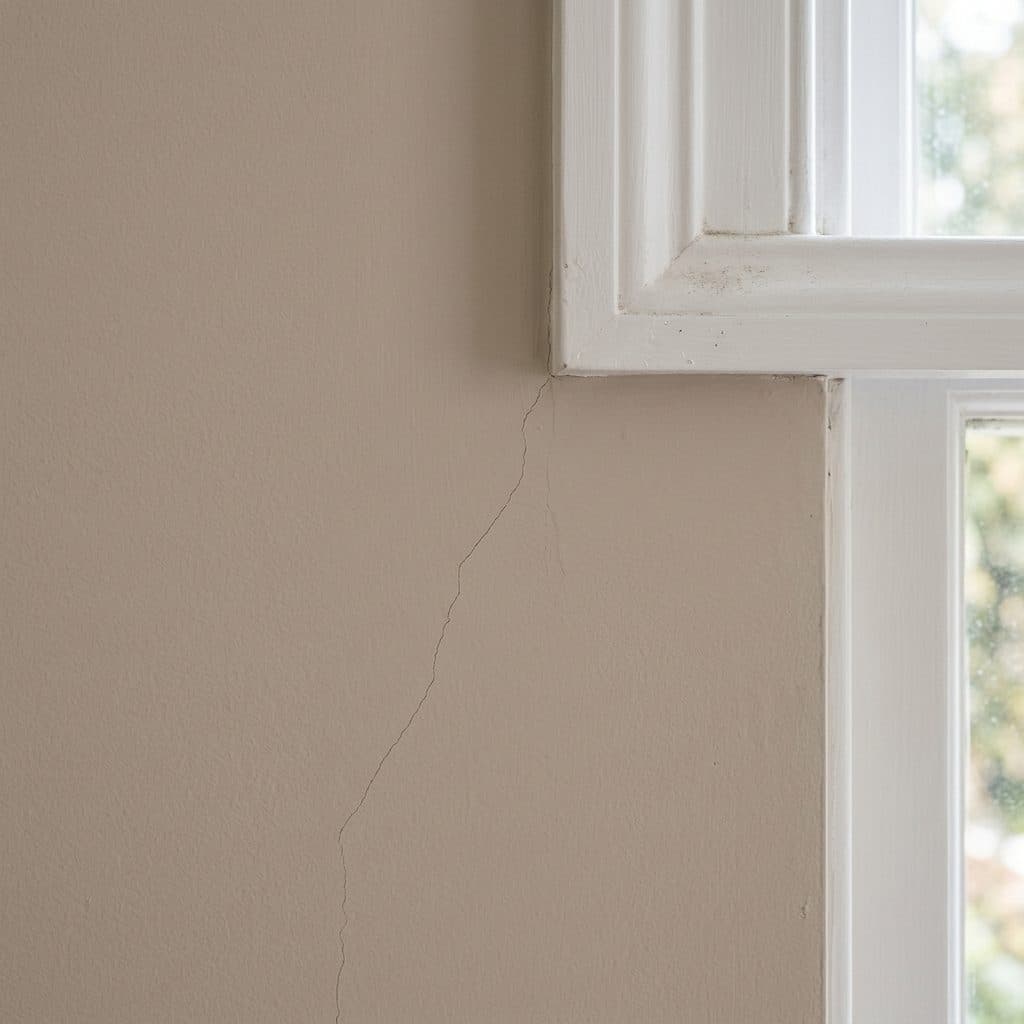
A hairline crack running across a freshly painted wall is one of the more common things Durahome gets asked about before a repaint. A true hairline paint crack is a thin surface-level fracture, generally under 1/16 inch wide, that affects the paint film or a thin skim coat rather than the framing or foundation behind it. Most of them are nothing more than what they look like: a cosmetic issue that gets fixed during normal prep and repainting.
This article is meant to help you understand what you are looking at and decide whether a professional estimate is worth scheduling. It is not a substitute for an in-person structural inspection, and nothing here should be treated as a final diagnosis of your specific wall.
Key Takeaways
What Counts as a Hairline Paint Crack?
A hairline crack running across a freshly painted wall is one of the more common things Durahome gets asked about before a repaint. A true hairline paint crack is a thin surface-level fracture, generally under 1/16 inch wide, that affects the paint film or a thin skim coat rather than the framing or foundation behind it. Most of them are nothing more than what they look like: a cosmetic issue that gets fixed during normal prep and repainting.
This article is meant to help you understand what you are looking at and decide whether a professional estimate is worth scheduling. It is not a substitute for an in-person structural inspection, and nothing here should be treated as a final diagnosis of your specific wall.
When a Crack Is Just Paint?
Paint cracking on walls is often just the paint itself aging out. As paint film gets older, it loses flexibility, and normal seasonal movement in the wall behind it is enough to crack a coating that can no longer stretch with the surface. A skim coat or patch that was recently applied can also develop thin shrinkage cracks as it fully cures, which is a normal part of the drying process rather than a sign of a deeper problem.
Cracks in this category tend to stay the same width over time, run in random or straight patterns near trim and seams, and do not show up alongside any other changes in the room. If that describes what you are seeing, it is very likely cosmetic.
Hairline Crack Decision Table: Width, Direction, and What It Likely Means
Use this table as a starting point, not a final answer. Location, pattern, and whether the crack is changing over time all matter alongside width.
| Crack Type | Typical Width | Likely Cause | Recommended Next Step |
|---|---|---|---|
| Thin, straight, near trim or seams | Under 1/16 inch | Paint aging, minor seasonal movement | Cosmetic repair during normal prep and repaint |
| Thin, diagonal, from a door or window corner | Under 1/16 inch | Common settling stress point | Monitor; cosmetic repair if stable |
| Wider than 1/8 inch, or growing | 1/8 inch or more | Possible ongoing movement | Professional evaluation recommended |
| Horizontal, anywhere on the wall | Any width | Possible lateral pressure or structural stress | Structural engineer evaluation recommended |
| Stair-step pattern in brick or block | Any width | Possible foundation movement | Structural engineer evaluation recommended |
Why Horizontal Wall Cracks Deserve Extra Caution?
A horizontal hairline crack in wall is treated differently than a vertical or diagonal one, and for good reason. Vertical and diagonal cracks are usually explained by normal settling or thermal movement. A horizontal crack, especially one running along a foundation or basement wall, is more often associated with lateral pressure pushing against the wall from outside, which is a different kind of problem entirely.
If you notice a horizontal wall crack, especially one accompanied by any bowing or bulging in the wall itself, this is not something to paint over and monitor casually. It is worth a professional evaluation before any cosmetic repair happens, since covering structural wall cracks issue with fresh paint does not address what is actually happening underneath.
What Makes a Crack Structural, Not Cosmetic?
A few warning signs point beyond a simple paint issue. Doors or windows that have started sticking or no longer latch properly, floors that feel noticeably uneven, gaps opening up where a wall meets the ceiling, and cracks that keep growing week over week are all signs the crack is a symptom of something happening in the structure itself, not just the paint.
For scale, the U.S. Department of Housing and Urban Development's inspection standards flag a foundation crack as a deficiency once it reaches roughly a quarter inch wide and a foot long. That is a useful reference point, not a hard line for every wall in every home, but it illustrates that width and length are real, measurable signals rather than guesswork. If your crack approaches that scale, or if any of the warning signs above are present, a structural engineer or a qualified foundation specialist is the right call, not a painting contractor.
Does Minnesota Weather Make Cracks Worse?
Minnesota's freeze-thaw winters and large humidity swings between seasons put more stress on paint film and minor drywall seams than a milder, more stable climate would. That is part of why hairline cracking often seems to show up or become more visible during the shoulder seasons, as materials expand and contract with the temperature swing. This is consistent with normal cosmetic cracking and is not, on its own, a sign of a structural issue.
How Durahome Handles Cracks During a Repaint?
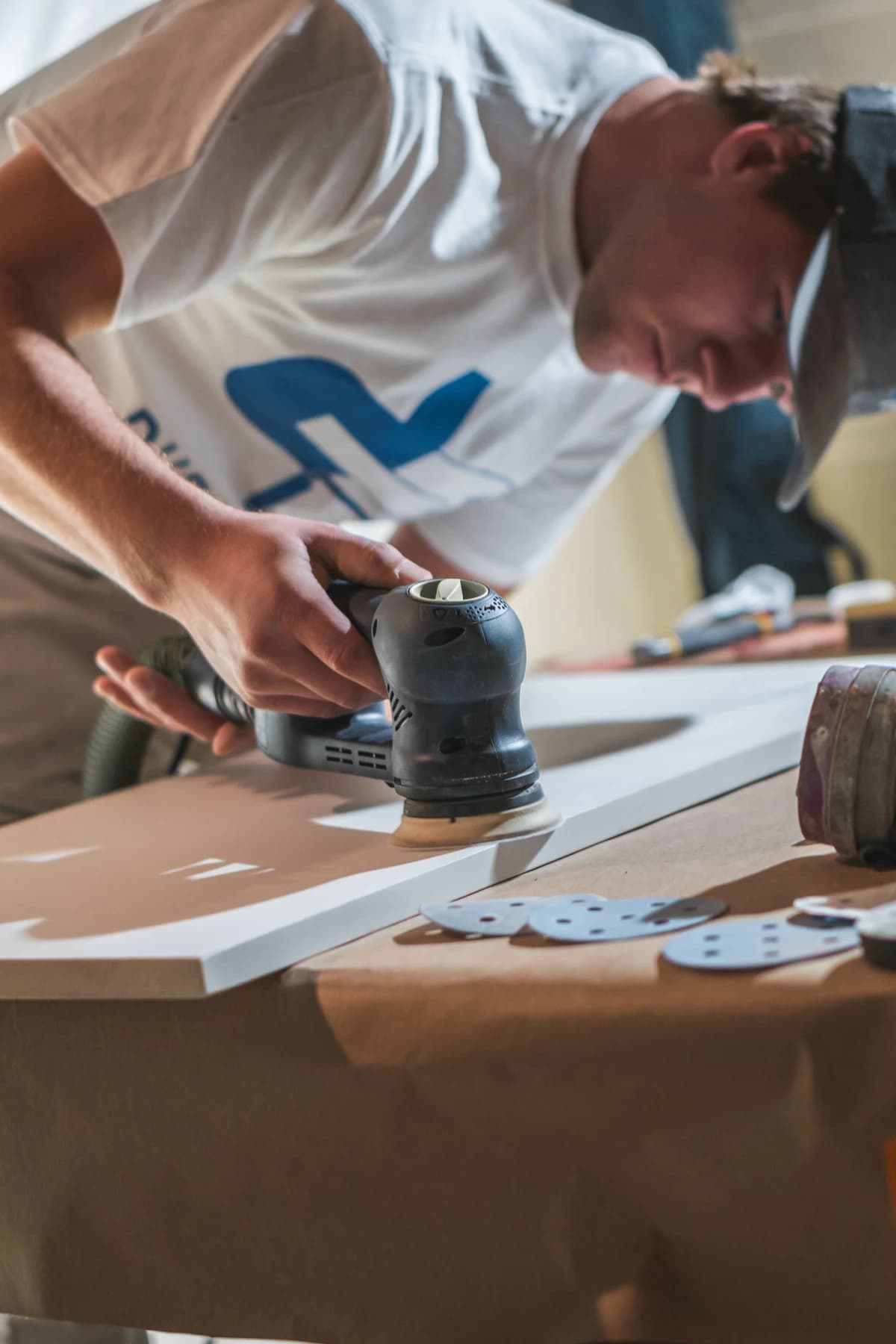
On every interior project, nail holes, cracks, and popped fasteners get repaired and spot-primed before any color goes on the wall. Where a crack has reappeared after a previous cosmetic fix, Durahome re-sets and skim-coats the area properly rather than just filling it again and hoping the same patch holds. This is cosmetic and cosmetic-adjacent repair work as part of standard prep, not a structural assessment or repair, and Durahome will always say so plainly if a crack looks like it needs a structural professional's opinion instead.
One Group Text: the production manager, owner, estimator, and crew foreman are in one thread with you from day one.
The Same Crew: around 90% painter retention year over year, with most painters carrying close to a decade of experience.
Sherwin-Williams: premium products used throughout every project, including flexible fillers suited to repaired walls.
2-5 Year Written Warranty: scaled to the scope of the project, so if something comes up, Durahome comes back.
Durahome estimates on the high side over the phone and often comes in lower once a project manager has actually walked the property. The written estimate is exact, and it is always free.
Painting Over a Crack the Right Way, or Not at All
Most hairline cracks are exactly what they look like: a cosmetic sign that paint has aged or a wall has moved slightly with the seasons. Knowing the difference between that and a structural warning sign protects both your home and your paint job, since covering a real structural issue with fresh color never actually fixes it.
If you have cracks that look cosmetic and are ready for a proper repair before repainting, request a free estimate from Durahome and get an honest read on what your walls actually need.
Frequently Asked Questions
What causes hairline paint cracks?
Most hairline paint cracks come from paint aging and losing flexibility, minor seasonal movement in the wall, or shrinkage as a recent patch or skim coat fully cures.
Is paint cracking on walls always something to worry about?
No. Most paint cracking is cosmetic, especially when it is thin, stable over time, and located near trim, seams, or corners where minor movement is normal.
What does a horizontal hairline crack in wall usually mean?
Horizontal cracks are treated more seriously than vertical ones, since they are more often linked to lateral pressure on a wall. A horizontal crack, especially with any bulging, is worth a professional evaluation.
Are horizontal wall cracks always structural?
Not always, but they carry more risk than vertical or diagonal cracks and should not be assumed cosmetic without a closer look, particularly on foundation or basement walls.
How do I know if a wall crack is structural?
Look at width, direction, and whether other symptoms are present, such as sticking doors, sloped floors, or a crack that keeps growing. Cracks over 1/8 inch, horizontal cracks, and stair-step patterns in masonry all warrant a professional opinion.
Can Durahome tell me if my wall crack is structural?
Durahome can identify cosmetic cracks and repair them properly during a repaint, but structural diagnosis is outside a painting company's scope. Any crack with structural warning signs should be evaluated by a structural engineer or qualified foundation specialist.