

At Durahome, sheen choice is one of the first decisions the team walks homeowners through on a bathroom repaint, and the honest answer is that neither sheen wins outright. For most bathroom walls, satin is the better default. It resists moisture well enough for normal bathroom humidity and hides drywall seams and old patches far better than a shinier finish. Semi-gloss earns its place in specific spots: walls in direct splash range of the shower or tub, and ceilings in bathrooms with weak ventilation.
Key Takeaways
The Quick Answer: Satin or Semi-Gloss for Bathroom Walls
At Durahome, sheen choice is one of the first decisions the team walks homeowners through on a bathroom repaint, and the honest answer is that neither sheen wins outright. For most bathroom walls, satin is the better default. It resists moisture well enough for normal bathroom humidity and hides drywall seams and old patches far better than a shinier finish. Semi-gloss earns its place in specific spots: walls in direct splash range of the shower or tub, and ceilings in bathrooms with weak ventilation.
Is Satin Paint Good for Bathrooms?
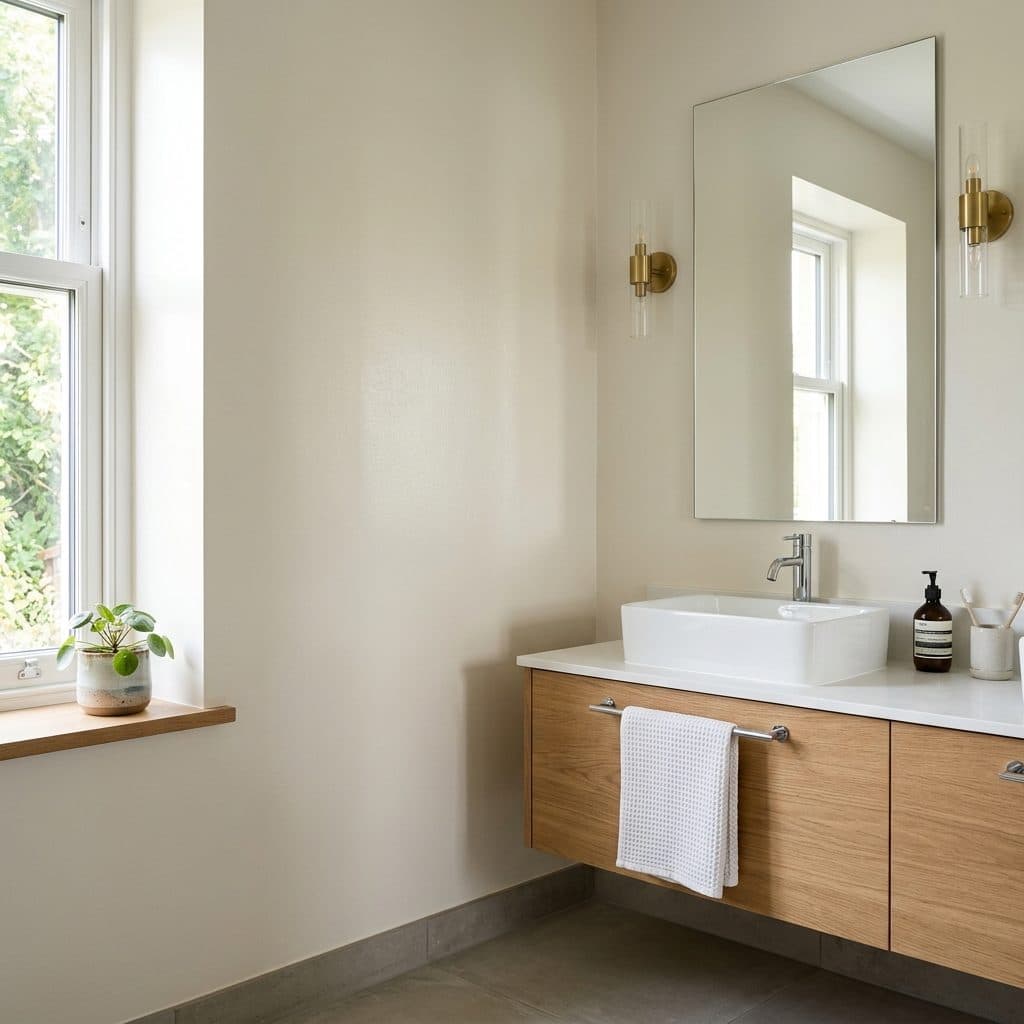
Yes, satin paint is a solid choice for most bathroom walls. It has enough sheen to wipe clean and resist everyday moisture, without the harsh reflectivity that shows off every seam, patch, and roller mark on an older wall. That last point matters more than most homeowners expect. A bathroom that has been patched and repainted a few times over the years will look noticeably smoother in satin than in a glossier finish, since the lower reflectivity softens minor surface imperfections instead of highlighting them.
Modern kitchen and bath satin lines from major manufacturers use denser resin formulations than standard satin, closing much of the performance gap that used to exist between satin and semi-gloss. Applied over a properly primed, well-prepared wall, a quality satin holds up well in a normally ventilated bathroom for years.
Is Semi-Gloss Paint Good for Bathrooms?
Yes, and it is the stronger choice in a few specific conditions. Semi-gloss forms a smoother, denser paint film that sheds water more effectively than satin, which matters most where water actually lands on the wall rather than just floats through the air as humidity. It is also the easiest sheen to wipe down, which is why it remains the standard recommendation for kitchens and bathrooms across most manufacturer guides.
The tradeoff is that semi-gloss reflects more light, which means it shows wall imperfections more clearly. In an older bathroom with uneven walls or visible patch work, an all-semi-gloss approach can end up looking worse than a satin finish on the same wall.
Satin or Semi-Gloss for Bathroom: By Zone
The most practical approach is not choosing one sheen for the whole room. It is matching the sheen to what each wall actually has to withstand.
| Zone | Recommended Sheen | Why |
|---|---|---|
| Ceiling | Semi-gloss | Catches the most humidity as hot, moist air rises; benefits from the most moisture-resistant film in the room. |
| Splash-zone walls (adjacent to tub or shower) | Semi-gloss | Direct water contact sheds more effectively off a smoother, denser film. |
| Vanity wall and general walls | Satin | Normal humidity exposure, benefits more from hiding imperfections than from extra water resistance. |
| Trim, doors, and door casing | Semi-gloss | Handled often, needs the most durable and washable finish in the room. |
Does Minnesota Humidity Change the Answer?
Ventilation matters more here than the sheen debate suggests on its own. A Minnesota bathroom swings harder between humid and dry than a bathroom in a milder, more humidity-stable climate. A hot shower can push a small bathroom to near-saturation in minutes, and Minnesota's dry winter heating pulls that humidity back down fast once the shower ends. That swing is harder on any paint film, regardless of sheen, and it is why the EPA's guidance on mold and moisture control puts running the bathroom fan during and after a shower at the top of its prevention list.
If your bathroom exhaust fan is weak, loud enough that nobody actually runs it, or missing altogether, lean toward semi-gloss on more of the room, not just the splash zone. Good ventilation is what lets satin perform closer to its full potential everywhere else.
What Durahome Recommends?
On interior projects, Durahome chooses sheen per room rather than defaulting to one finish throughout the house. That means washable, higher-sheen finishes where hands actually land and moisture actually collects, and flatter, more forgiving finishes overhead and on lower-traffic walls. For bathrooms specifically, that usually means satin walls with semi-gloss reserved for the ceiling, the splash zone, and the trim, unless the room's ventilation calls for more coverage. See Durahome's interior house painting service for how this gets applied project to project.
One Group Text: the production manager, owner, estimator, and crew foreman are in one thread with you from day one.
The Same Crew: around 90% painter retention year over year, with most painters carrying close to a decade of experience.
Sherwin-Williams: premium products used throughout every interior project, sheen matched to each room and zone.
2-5 Year Written Warranty: scaled to the scope of the project, so if something comes up, Durahome comes back.
Durahome estimates on the high side over the phone and often comes in lower once a project manager has actually walked the property. The written estimate is exact, and it is always free. See current interior painting cost ranges for Minneapolis and St. Paul for a sense of what a bathroom or full interior project typically runs.
The Right Sheen for Every Wall in the Room
Satin or semi-gloss for a bathroom is not really a single decision. It is a per-wall decision that comes down to how much water each surface actually sees and how forgiving you need the finish to be over an older wall. Semi-gloss where water lands directly, satin everywhere else, and a closer eye on ventilation than a bathroom in a milder climate would need.
If you are planning a bathroom repaint and want a straight answer on sheen for your specific space, request a free estimate from Durahome and get a estimate before any paint goes on the wall.
Frequently Asked Questions
Is satin paint good for bathrooms?
Yes, for most bathroom walls. It resists normal humidity well and hides minor wall imperfections better than semi-gloss, especially on older, previously patched walls.
What's the difference between satin and semi-gloss for a bathroom?
Semi-gloss has a denser, smoother paint film that sheds water more effectively and cleans more easily. Satin has a softer sheen that hides imperfections better but shows slightly less moisture resistance in direct splash zones.
Should bathroom ceilings be semi-gloss?
Generally yes, especially in bathrooms with weak ventilation. Ceilings collect the most rising humidity in the room, so the extra moisture resistance is worth the tradeoff.
Does satin show fingerprints more than semi-gloss?
Satin actually hides fingerprints and smudges slightly better than semi-gloss, since its lower reflectivity is more forgiving of surface marks.
Can I mix satin and semi-gloss in the same bathroom?
Yes, and it is a common professional approach. Semi-gloss on the ceiling, splash zone, and trim, with satin on the remaining walls, is a practical way to get durability where it matters most without losing the more forgiving look of satin elsewhere.