

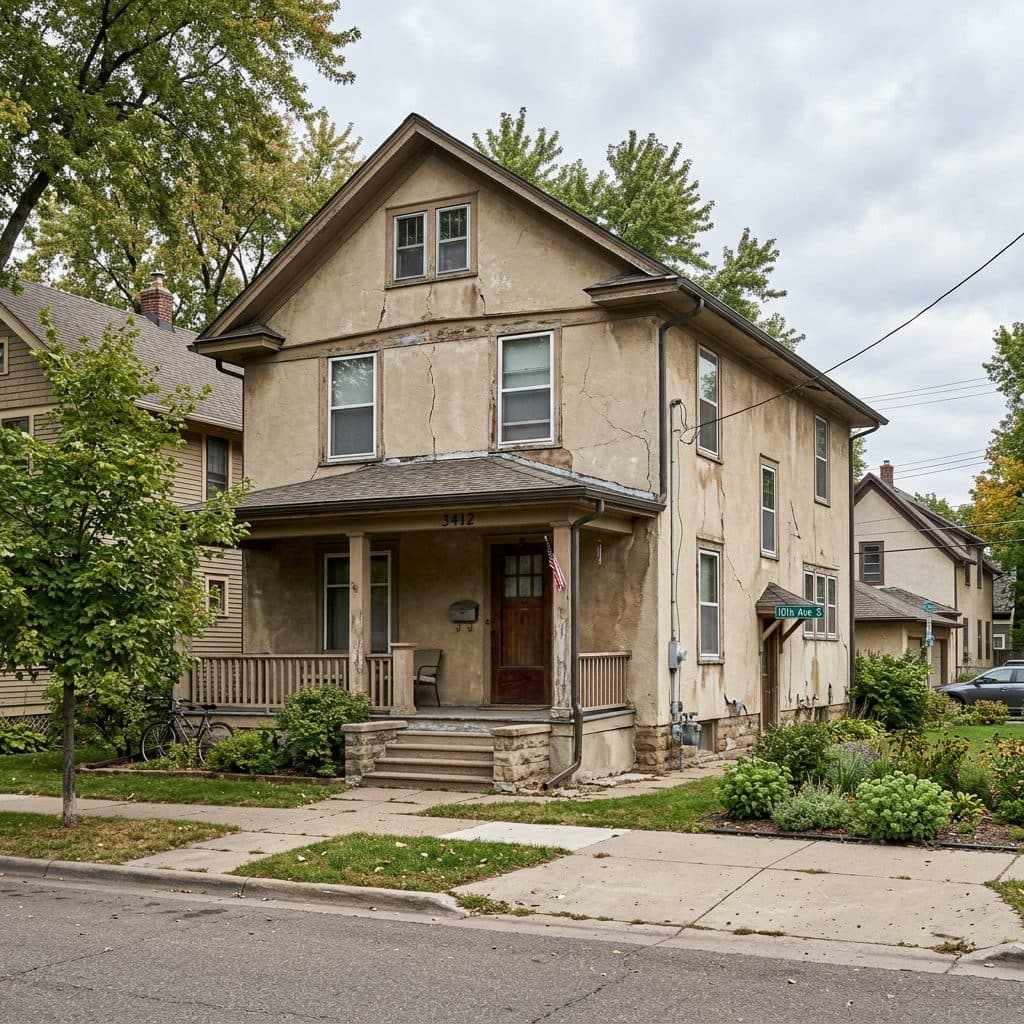

The most common signs of stucco problems are cracks that keep widening, dark staining or white powdery residue, bubbling or soft spots, and a hollow sound when you tap the surface. Some of these are cosmetic and can be sealed and painted over. Others mean moisture is already trapped behind the wall, a sign of real stucco damage that needs a closer look before any paint goes on. Durahome is here to tell you the difference and what happens next.
Key Takeaways
Why Stucco Cracks in Minnesota Homes
Stucco is a rigid, cement-based material, and rigid materials do not handle temperature swings well. Minneapolis and St. Paul homes go through roughly 30 freeze-thaw cycles every winter. Water gets into a hairline crack or a seam, freezes, expands, and pushes the crack open a little wider. By spring, it has happened dozens of times.
This is part of why south Minneapolis and neighborhoods like Linden Hills and Kingfield see this pattern so consistently. Much of the stucco in these areas is original to homes built between 1900 and 1940, meaning it has been through eighty or more winters of this cycle already. Add UV exposure off snow in February and off standing water in July, and even well-installed stucco eventually shows wear.
None of this means stucco was a bad choice for a Twin Cities home. It means a stucco wall needs a periodic look, the same way a roof or a furnace does.
Common Signs of Stucco Problems in Twin Cities Homes
These are the most common stucco problems Durahome's crews see on stucco homes across Minneapolis, St. Paul, and stucco-heavy suburbs like Edina.
Widening or Stair-Step Cracks
Small hairline cracks under about 1/16 inch are normal as stucco cures and settles. Cracks that grow year over year, or that step diagonally like a staircase from a window corner, usually mean water is working behind the surface.
Bubbling or Blistering
When moisture gets trapped between the stucco and the wall behind it, the surface bubbles or blisters instead of lying flat. This is one of the more urgent signs, since it means water already has a way in.
Efflorescence (White, Chalky Residue)
A white, powdery film on the surface is efflorescence: mineral deposits left behind after water moves through the stucco and evaporates. It is not structurally harmful on its own, but it always means moisture found a path in somewhere.
Dark Staining or Discoloration
Brown or black streaks, especially below windowsills or near rooflines, usually trace back to a specific leak point rather than general weathering.
Bulging or Soft Spots
Press gently on a suspect area. If it gives or feels soft, water has likely reached the lath or sheathing underneath, and the damage goes deeper than the surface.
Chipping, Flaking, or Crumbling
Stucco that loses cohesion and starts breaking off in small chips is deteriorating, whether from age, an original installation issue, or long-term water exposure.
A Hollow Sound When Tapped
Tap the wall in a few spots with a knuckle. A solid thud is normal. A hollow or drum-like sound means the stucco has separated from what is behind it.
Cracking Around Windows and Doors
This is one of the most common failure points on any stucco home, since the caulking and flashing around openings age faster than the stucco field around them.
Staining Near the Foundation
Stucco that extends too close to grade traps moisture at the base of the wall, showing up as staining or crumbling low on the exterior.
Signs of Stucco Problems You Can Spot From Inside the House
A stucco problem does not always show up on the exterior first. Peeling paint or bubbling on an interior wall that backs up to an exterior wall, a musty smell near a specific room, or soft drywall near a window casing can all point back to moisture coming in from outside. Minnesota's long heating season already dries out drywall joints and shows movement cracks every winter, which can make an interior sign harder to separate from ordinary seasonal cracking. If an interior sign lines up with a location where you have also noticed something on the exterior, like a stain below a window on the same wall, that is a strong indicator the two are connected. The Minnesota Department of Health notes that any musty smell or visible mold indoors should be treated as a moisture problem first, since mold will not grow without water finding a way in.
Normal Wear or Real Problem? A Quick Way to Tell
Not every mark on a stucco wall means trouble. Here is a quick way to sort the two apart before deciding whether it is time to call someone.
| Usually normal | Worth a closer look |
|---|---|
| Hairline cracks under 1/16 inch that are not growing | Cracks that widen year over year or step diagonally |
| Light surface chalking that wipes off with a hand | Bubbling, blistering, or a hollow sound when tapped |
| Minor color fading from UV exposure | Dark staining, especially below windows or rooflines |
| Small, stable efflorescence that cleans off easily | Soft spots, bulging, or crumbling to the touch |
Stucco Repair Before Painting: How Durahome Handles It
Stucco repair before painting is part of Durahome's exterior process, not a separate project bolted on afterward. During the wash, scrape, and repair stages of exterior house painting, crews check every wall for the signs above, seal minor cracks, patch small areas of chipping or crumbling, and confirm the surface is sound before any primer goes on. A hard, non-breathable coating applied over a stucco wall that is still holding moisture traps that moisture in, and causes more damage than the crack it covered. Getting the sequence right matters as much as the paint itself.
The cost of that prep is not a separate line item a homeowner finds out about later. It gets itemized in the written estimate before work starts, alongside everything else the crew found during the estimate. That is the whole point of the No-Surprise Guarantee: what gets fixed, and what it costs, is agreed to in writing first.
Not every stucco problem belongs on a painting estimate, though. Bulging, soft, or crumbling stucco that suggests the lath or sheathing underneath has failed is a structural issue, and honest advice matters more than a sale here. If a estimate turns up damage beyond what surface prep and patching can fix, Durahome will say so, and point toward the kind of repair the situation actually needs before recommending paint at all.
The Durahome Standard
Every Durahome estimate carries the same trust stack, whether the job is a full repaint or a stucco patch ahead of one.
The No-Surprise Guarantee: a fixed written price, with any added scope priced and approved in writing before work begins.
A written warranty, two to five years depending on scope, paired with a 30-day touch-up window after completion.
Full insurance: general liability and workers' compensation coverage on every crew member.
The same crew start to finish, with roughly 90% year-over-year retention and close to a decade of average crew experience.
A direct escalation path if something needs attention: foreman, then production manager, then owner Cody Sanoy, with no call center in between.
Full details are on the guarantee page.
Catch It Before It Costs You a Repaint
Most stucco problems are easier to deal with at the crack stage than at the crumbling stage. A crew walks the exterior, points out exactly what they see wall by wall, and hands over a written estimate that separates simple prep from anything bigger before a single tarp goes down.
Book your free estimate and find out whether that crack on the north wall is normal wear or something worth fixing first. Or call 612-400-8864 to talk it through directly.
Frequently Asked Questions
Are small cracks in stucco always a problem?
No. Hairline cracks under about 1/16 inch are common as stucco settles and are usually cosmetic. Cracks that widen over time, run in a spiderweb or stair-step pattern, or appear near windows and corners are the ones worth a closer look.
What causes stucco to crack in Minnesota specifically?
Minnesota's freeze-thaw cycle is the biggest factor. Water gets into a crack, freezes, expands, and widens the crack a little further, and the cycle repeats through the winter.
Can stucco be painted over if it has cracks?
Small, stable cracks can be sealed and painted over as part of standard prep. Active cracks tied to moisture intrusion need to be addressed first, or the coating traps the problem underneath instead of fixing it.
How do I know if I need a stucco specialist instead of a painting contractor?
If the stucco is bulging, soft, or crumbling in a way that suggests damage behind the surface rather than on it, that points to a structural or remediation issue outside what paint prep can fix.
Does Durahome's warranty cover stucco cracks after painting?
The written warranty, two to five years depending on scope, covers workmanship and finish failure on the surfaces Durahome prepped and coated. Structural stucco failure unrelated to the coating itself falls outside that scope.