

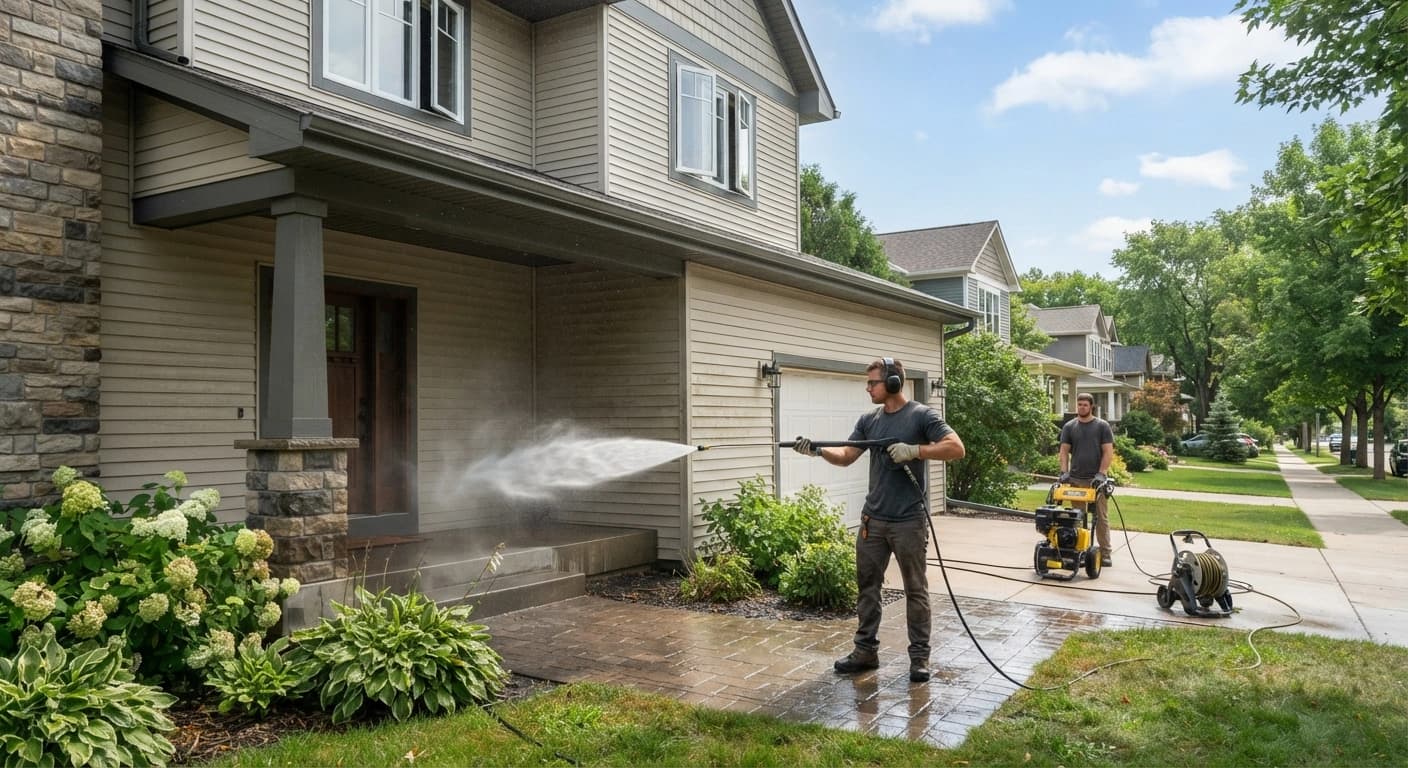
Dirt, grime, and seasonal buildup can make your home’s exterior look worn, but figuring out the cost of cleaning it isn’t always easy. Professional pressure washing for a 2,000 sq ft home typically costs $200–$500, while renting a machine can cost $40–$100 per day. This guide covers pressure washing costs across Minneapolis and the Twin Cities, along with the factors that affect pricing and how to choose the right option for your home.
Key Takeaways
What a 2,000 Sq Ft House Actually Costs to Pressure Wash?
Here is the cost picture for a 2,000 square foot home, broken into the scenarios most homeowners face:
| Scenario | Estimated Cost |
|---|---|
| Basic wash (one story, vinyl siding, light dirt) | $$200–$$350 |
| Standard wash (two stories, mixed siding, moderate buildup) | $$300–$$500 |
| Heavy cleaning (visible mold, algae, multi-surface treatment) | $$450–$$650 |
| DIY rental (machine + cleaning solution) | $$55–$$130 per day |
One detail that trips homeowners up: "2,000 square feet" usually refers to living space, but pressure washing is priced by wall area. A two-story home with 2,000 sq ft of living space has roughly the same total wall area as a one-story with the same footprint, but the second story adds height access costs. That is why two quotes for the same floor plan can look different.
In Minneapolis and St. Paul, pressure washing costs depend on the home’s size, exterior material, and level of dirt buildup. The shorter washing season can also affect scheduling and demand. If you are planning to paint your exterior afterward, scheduling the wash for April or May gives the surface time to dry and puts you in the painting window.
What Moves the Price Most (and What Barely Matters)
Not every factor carries the same weight. Here is what actually swings your bill, ranked by impact.
Stories and Height Access
This is the single biggest variable for a 2,000 sq ft home. A one-story ranch with that floor plan might cost $200–$350. A two-story colonial with the same living space jumps to $350–$500, and three stories or homes with dormers and steep gables can push past $600. The price difference comes from extension wands, ladder time, and occasionally lift rental. Two-story homes are common across Minneapolis neighborhoods like Southwest, Northeast, and the Chain of Lakes area, so this factor affects most local quotes.
Siding Material
Different materials tolerate different pressure levels and require different techniques. That affects time on site, which affects cost.
| Material | Cost per Sq Ft | Estimated Total (2,000 sq ft) |
|---|---|---|
| Vinyl | $0.20–$0.40 | $200–$400 |
| Brick | $0.10–$0.40 | $150–$350 |
| Stucco | $0.30–$0.50 | $300–$500 |
| Wood | $0.30–$0.55 | $300–$550 |
Stucco and wood sit at the top because both need lower pressure or a soft wash approach. Too much force on stucco can drive water behind the finish or chip the surface, and wood siding can splinter or lose its existing paint film. If your Twin Cities home has stucco (and a fair number do, especially post-war builds in St. Paul), ask your contractor whether they use soft washing on that material. Homes with stucco damage already showing need an inspection before anyone points a pressure washer at them.
Buildup, Mold, and Surface Condition
A house that gets washed annually is a maintenance job. A house that has not been touched in three to five years, especially on a north-facing wall where Minnesota's humidity feeds mildew growth, is a restoration job. Heavy mold or algae treatment adds a pre-treatment step ($50–$150) and more time. Expect the total to land closer to the $450–$650 range when heavy biological growth is present.
Factors That Barely Change the Bill
Water source availability rarely matters (most residential properties have a spigot). Flat lot versus a gentle slope makes a minor difference. Seasonal timing can save a small amount if you book in fall when demand drops off, but the discount is modest compared to the factors above.
Should You Rent a Pressure Washer or Hire a Pro?
This is the question most homeowners are really asking when they search for cost estimates. The math looks straightforward until you factor in time, risk, and what you are actually washing.
The Real Cost Comparison for a 2,000 Sq Ft House
| DIY (Rental) | Professional | |
|---|---|---|
| Equipment | $40–$100/day | Included |
| Cleaning solution | $15–$30 | Included |
| Your time | 6–8 hours | 0 hours (pro crew: 2–4 hrs) |
| Risk of damage | Moderate | Low (insured) |
| Total out of pocket | $55–$130 | $250–$500 |
The gap between $55 and $250 is real, and for some homeowners it is the right call to DIY. For others, the time, the risk, and the learning curve tip the decision the other way. Here is how to think about it honestly.
When DIY Makes Sense
Renting a machine and doing it yourself is a reasonable choice when the job is contained and low-risk:
The key word is "careful." Pressure at the wrong angle or too high a PSI forces water behind lap siding, splinters wood, strips paint, and voids some siding warranties. If you go the rental route, start with the lowest effective pressure setting and work up. Read the machine's manual. Test on an inconspicuous section first.
When Hiring Makes Sense
Bringing in a pro crew is the better fit when the stakes or complexity go up:
A professional crew also carries liability insurance. If a window seal fails, siding cracks, or water intrusion occurs, their policy covers it. A DIY mistake comes out of your pocket and your weekend.
When a Wash Shows You Need More Than a Wash
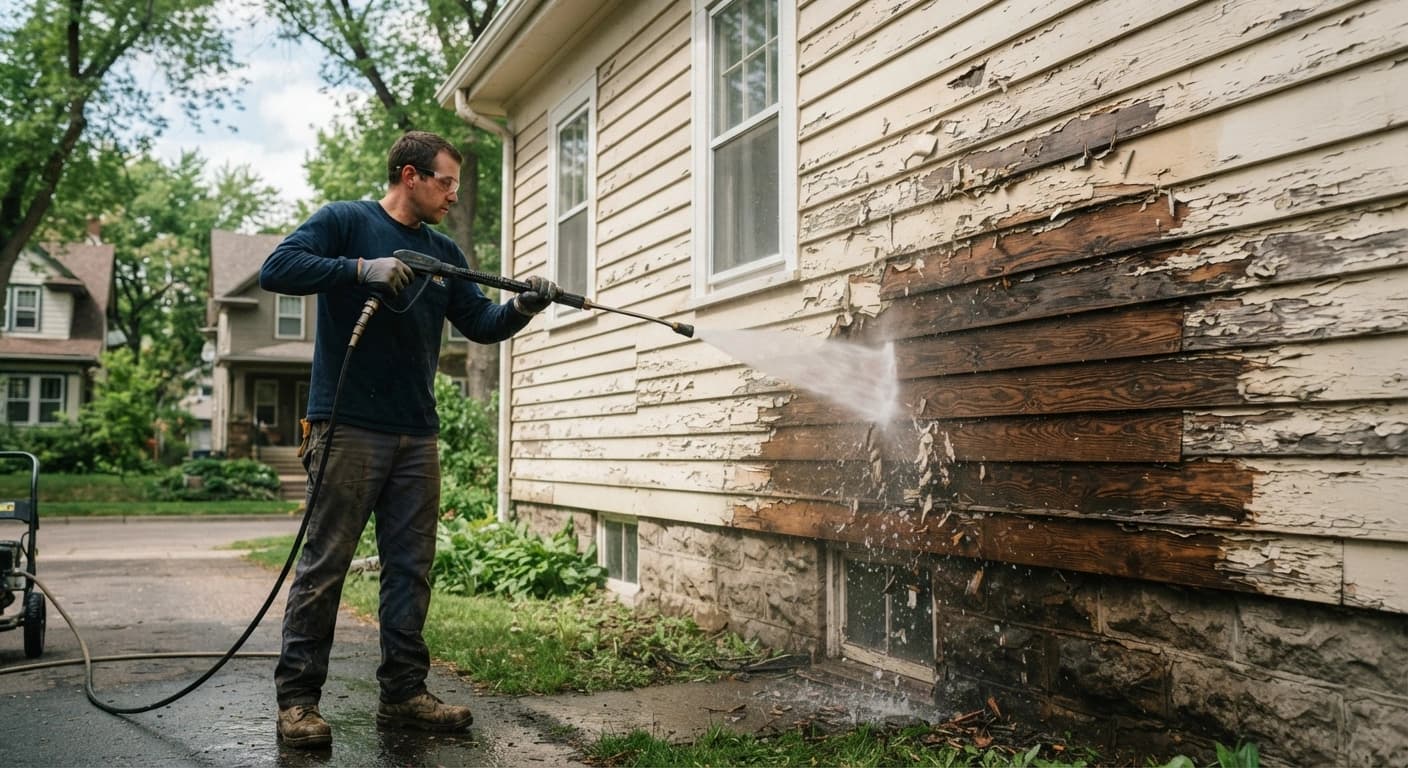
Pressure washing can reveal hidden paint problems, including chalking, peeling around window casings, exposed wood, and cracked caulk. These issues require proper surface preparation and repainting rather than another wash. The exterior repaint process typically includes washing, scraping, sanding, priming, caulking, and applying two finish coats.
A standard exterior repaint in the Twin Cities typically costs $6,000–$8,000 and takes 3–4 days, with washing included in the project scope.
What separates Durahome from the quote you are comparing it against:
If the wash reveals something the wash cannot fix, request a free exterior painting estimate and get a written price that does not change.
Pressure Washing, Power Washing, and Soft Washing: Which One?
Pressure washing, power washing, and soft washing differ in pressure, temperature, and cleaning methods. Pressure washing uses high-pressure cold water for durable surfaces, while power washing uses heated water to remove stubborn grease and oil. Soft washing combines low pressure with cleaning solutions, making it suitable for stucco, painted wood, and older siding.
For a 2,000 sq ft home, the right method depends on the exterior material and its condition. Learn more in this guide to pressure washing costs and methods.
Frequently Asked Questions
How much does it cost to pressure wash a 2,000 sq ft house yourself?
Expect to spend $55–$130 for the day: $40–$100 for a machine rental and $15–$30 for cleaning solution. The job takes most first-timers 6–8 hours on a two-story house and 4–6 hours on a single story. Factor in pickup, return, and cleanup time on top of that.
How long does it take to pressure wash a 2,000 sq ft house?
A professional crew finishes in 2–4 hours depending on stories and surface condition. A homeowner doing it for the first time should plan for 6–8 hours including setup and breakdown. Homes with heavy mold or multiple siding types take longer regardless of who does it.
Do you need to pressure wash before painting a house?
Yes. Dirt, mildew, pollen, and chalking paint prevent new coatings from bonding properly. Every professional painting contractor includes a wash as the first prep step. Skipping it is the fastest way to guarantee early paint failure, especially in Minnesota where mildew and oxidation build up through every freeze-thaw season.
Is it cheaper to pressure wash or power wash a house?
Standard pressure washing and power washing cost about the same for residential work ($200–$500 for a 2,000 sq ft house). Power washing uses heated water, which adds a small equipment premium but is rarely necessary for home exteriors. Most residential jobs use standard pressure washing or soft washing depending on the siding.
Can pressure washing damage my siding?
Yes, if the pressure is too high for the material. Wood and painted siding should not exceed 1,300–1,500 PSI. Vinyl handles up to about 2,000 PSI. Stucco needs soft washing at under 1,000 PSI. Damage from incorrect pressure includes splintered wood, stripped paint, cracked stucco, and water forced behind lap siding. A professional adjusts pressure and nozzle distance for each surface.
When is the best time to pressure wash a house in Minneapolis?
The usable window runs roughly March through November, though most homeowners book between April and September. If you are washing before an exterior paint project, schedule the job for April or May. That gives the siding time to dry thoroughly and puts the house into the May through early October painting season with a clean, prepped surface.