

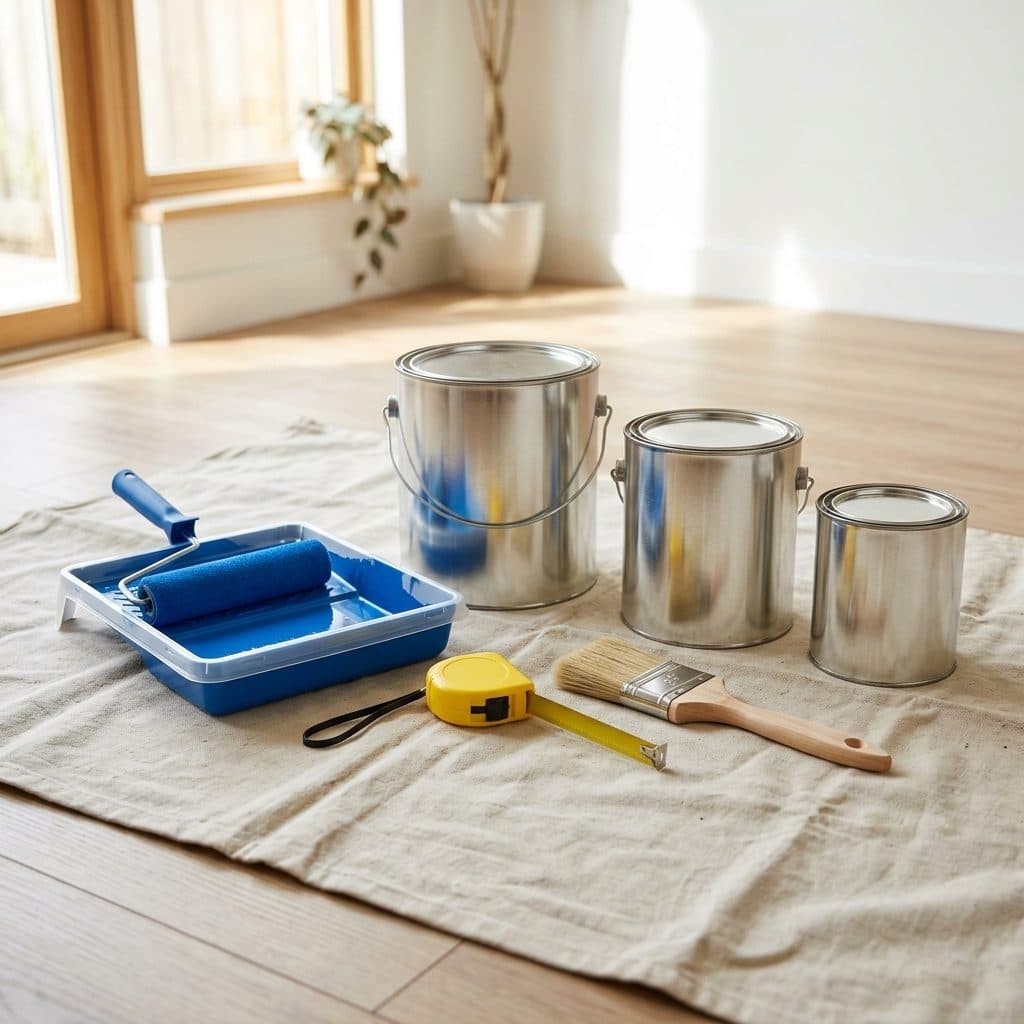
Figuring out how much paint to buy is one of the first questions Durahome hears from Twin Cities homeowners planning a DIY refresh. The short answer: one gallon of paint covers approximately 350 to 400 square feet with a single coat on a smooth, already-primed surface. That number drops by roughly half once you account for a second coat, which most interior and exterior projects need for even, lasting color.
Coverage numbers on the can are a starting point, not a guarantee. Wall condition, texture, and the paint itself all shift the real number up or down.
Key Takeaways
How Many Square Feet Does a Gallon of Paint Cover?
Figuring out how much paint to buy is one of the first questions Durahome hears from Twin Cities homeowners planning a DIY refresh. The short answer: one gallon of paint covers approximately 350 to 400 square feet with a single coat on a smooth, already-primed surface. That number drops by roughly half once you account for a second coat, which most interior and exterior projects need for even, lasting color.
Coverage numbers on the can are a starting point, not a guarantee. Wall condition, texture, and the paint itself all shift the real number up or down.
How to Calculate How Much Paint You Need?
The formula is simple once you have your measurements:
Gallons needed = (wall area x number of coats) ÷ coverage rate per gallon
Start by measuring the width and height of each wall and multiplying them together, then add the totals for every wall you plan to paint. Subtract roughly 20 square feet per door and 15 square feet per window if you want a tighter estimate.
For example, a bedroom with 400 square feet of paintable wall area, painted with two coats at a 375 square foot per gallon coverage rate, works out to:
400 x 2 = 800 total square feet to cover 800 ÷ 375 = 2.1 gallons
Round up. That project needs 3 gallons, or 2 gallons plus a quart to cover the extra.
Paint Coverage Calculator: Quick Reference Table
Use this table as a fast reference for common project sizes, based on a 375 square foot per gallon coverage rate.
| Paintable Area | Gallons for 1 Coat | Gallons for 2 Coats |
|---|---|---|
| 200 sq ft | 0.5 gal | 1.1 gal |
| 400 sq ft | 1.1 gal | 2.1 gal |
| 600 sq ft | 1.6 gal | 3.2 gal |
| 800 sq ft | 2.1 gal | 4.3 gal |
| 1,200 sq ft | 3.2 gal | 6.4 gal |
| 1,600 sq ft | 4.3 gal | 8.5 gal |
Always round up to the next whole gallon or quart rather than buying the exact fractional amount, and check your specific paint can for its stated coverage rate before finalizing a purchase.
What Changes How Far a Gallon Goes?
A few conditions push actual paint use above the number printed on the can. Textured surfaces, like stucco or heavily textured drywall, have more physical surface area than a flat wall, so they soak up more paint. Porous surfaces, including bare drywall, unpainted wood, and old plaster, absorb paint at a higher rate than a previously painted wall. A dramatic color change, especially going from dark to light or the reverse, often needs an extra coat regardless of what the coverage chart says.
Older painted surfaces add another variable. If your home was built before 1978 and the existing paint is failing or unknown, scraping and sanding it can release lead dust, and the EPA's guidance on lead-safe renovation covers what to check before starting that kind of prep work yourself. Surfaces that need this level of repair typically need more paint and more coats than a wall that only needs a light scuff and a fresh color.
Don't Forget Primer, Trim, and Ceilings
Primer is not the same product as finish paint, and it covers less ground per gallon, usually 200 to 300 square feet rather than 350 to 400. Bare wood, repaired drywall, and major color changes all call for a coat of primer before the finish color goes on.
Trim and ceilings should be calculated separately from walls, since they're often a different sheen or color and have a different total square footage. Measure trim length times width for its own total, and treat the ceiling as its own square footage using length times width, then apply the same coverage formula to each.
When the Math Gets Complicated
A single room with sound walls and a simple color change is a straightforward DIY calculation. A full interior, an exterior with multiple siding types, or a project with extensive prep work gets harder to estimate accurately without walking the space in person.
That's where a written estimate is worth more than another round of math. See Durahome's interior house painting service or exterior house painting service for a free estimate, and if you want a sense of what a project like yours typically runs before you call, Durahome's interior and exterior cost guides break down real Twin Cities pricing by project size.
One Group Text: the production manager, owner, estimator, and crew foreman are in one thread with you from day one.
The Same Crew: around 90% painter retention year over year, with most painters carrying close to a decade of experience.
Sherwin-Williams: premium products used throughout every project, so the coverage rate and color match are consistent from the first coat to the last.
2-5 Year Written Warranty: scaled to the scope of the project, so if something comes up, Durahome comes back.
Durahome estimates on the high side over the phone and often comes in lower once a project manager has actually walked the property. The written estimate is exact, and it is always free.
Buy the Right Amount the First Time
Paint coverage math is not complicated once you have your wall measurements and a coverage rate to work from. Measure carefully, plan for two coats where the project calls for it, and round up rather than guessing short and making a second trip to match a color.
If the project has grown past a single room or a straightforward color refresh, request a free estimate from Durahome and get an accurate read on materials and scope before anything goes on the wall.
Frequently Asked Questions
How many gallons of paint per square foot do I need?
Roughly one gallon per 350 to 400 square feet for a single coat, or closer to one gallon per 175 to 200 square feet once you account for a second coat.
How many square feet does 1 gallon of paint cover?
About 350 to 400 square feet with one coat on a smooth, primed surface. Textured or porous surfaces will cover less area per gallon.
How do I know how much paint to buy?
Measure your total wall area, decide how many coats you need, then divide the total square footage by your paint's stated coverage rate. Round up to the next whole gallon or quart.
How much paint do I need for a 12x12 room?
A 12-foot by 12-foot room with 8-foot ceilings has a perimeter of 48 feet, giving roughly 384 square feet of wall area before subtracting doors and windows. At two coats, that typically requires about 2 gallons.